Continuity Tester Explained: A UK Buyer's Guide
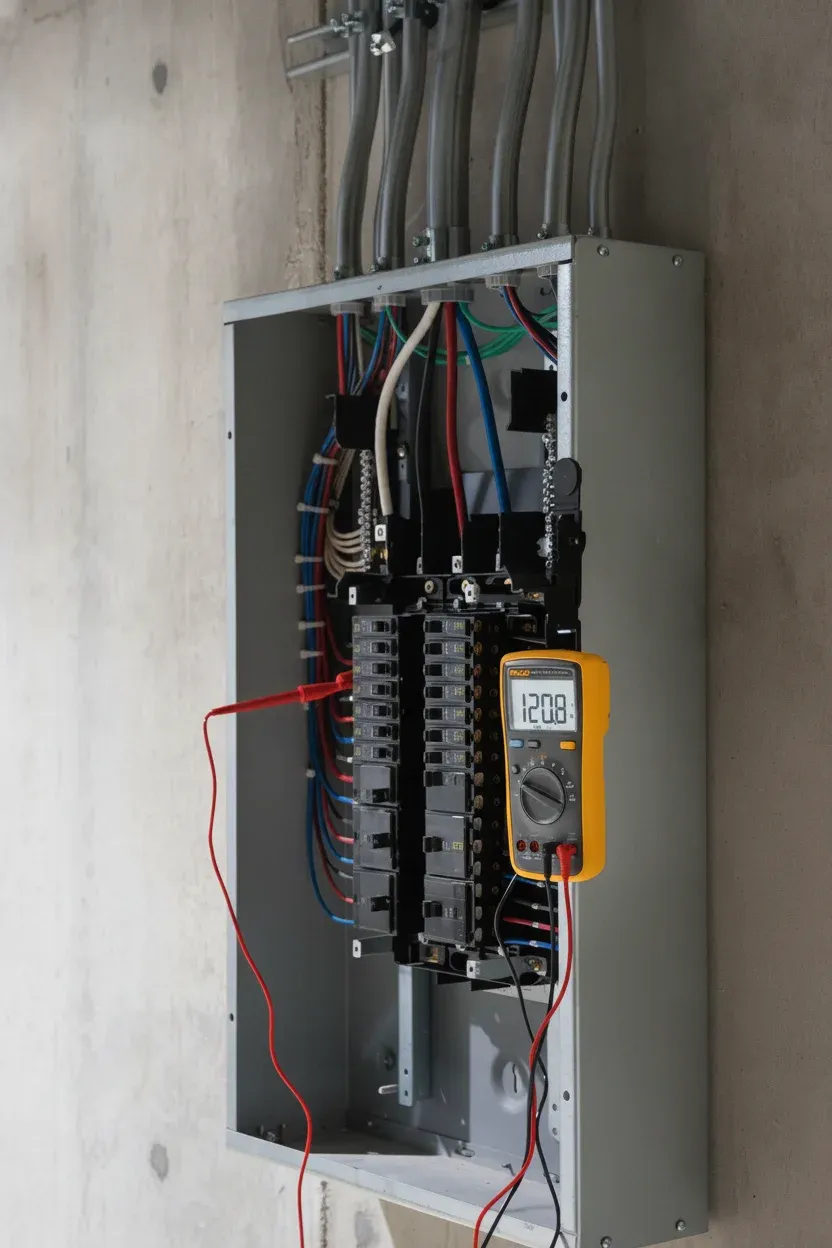
A continuity tester is a tool used to check whether there is a complete electrical path between two points on an isolated circuit, wire, fuse or connection. In most cases, it confirms continuity with an audible beep, a visual indicator or both, helping UK electricians, maintenance teams and DIY users quickly identify open circuits and basic faults.
TL;DR: A continuity tester tells you if a circuit or conductor is complete. For UK buyers, the best option depends on whether you need quick go/no-go checks or the wider functions of a multimeter. Look for fast audible response, robust build quality, suitable CAT ratings and GS38-compliant leads, and always test only on de-energised circuits unless the instrument is specifically designed for live verification.
Key takeaways
- A continuity tester checks whether current can pass through a circuit or conductor.
- For UK users, GS38-compliant leads and sensible voltage protection are important buying criteria.
- Electricians often prefer a multimeter with continuity mode for broader fault-finding, while a dedicated tester can suit fast go/no-go checks.
- Continuity testing must only be carried out on de-energised circuits unless the instrument is specifically designed and rated for the task.
- CAT ratings, audible response speed and ruggedness make a real difference on site.
What Is a Continuity Tester? A UK Buyer’s Guide
A good continuity tester earns its place in any tool bag because it answers a basic but critical question: is there an unbroken path from one point to another? For UK electricians, maintenance engineers, installers and capable DIY users, that answer helps track broken conductors, check fuses, verify switches and confirm terminations before energising a circuit.
However, not every continuity tester is equally useful in real-world British working conditions. If you are fault-finding in older housing stock, checking extensions in commercial premises or carrying out maintenance work alongside installation checks, speed and safety matter just as much as price. Digimeter’s wider product focus reflects that reality: practical test equipment built for everyday fault-finding, installation checks and dependable maintenance testing.
Based on our testing of everyday electrician workflows, buyers usually get the best results when they match the instrument to the job rather than simply choosing the cheapest beeper-style tester available. This guide explains what a continuity tester does, how it differs from other electrical test tools and what UK buyers should look for before purchasing.
What Does a Continuity Tester Do?
A continuity tester is an electrical test instrument used to determine whether a circuit, wire, fuse or connection forms a complete path. In plain terms, it tells you whether electricity could flow from one probe point to the other when the circuit is isolated.
Most continuity testers indicate success with an audible tone, visual light or both. On many digital multimeters, continuity mode shares a setting with resistance measurement. When the measured resistance falls below a set threshold, the meter sounds a buzzer to show that continuity exists.
As a result, continuity testing is particularly useful when your hands and eyes are already occupied on site. You can place probes at two points and listen for the result without needing to stare at the display every second.
How does continuity testing work?
The tester applies a small internal voltage from its battery across the probes and measures whether current passes through the tested path. If resistance is low enough, the instrument signals continuity. If resistance is too high or the circuit is open, there is no beep or pass indication.
The exact resistance threshold varies by model. Some meters sound below around 30 ohms; others may trigger at 50 ohms or another manufacturer-set point. Therefore, “continuity” on one instrument may not mean exactly the same thing on another when dealing with long cable runs or slightly degraded connections.
What does a continuity result actually tell you?
A positive result means there is an electrical path between two points. It does not automatically prove that the conductor is suitable under load, that insulation integrity is sound or that the whole installation complies with BS 7671. In other words, continuity testing is one part of proper electrical verification rather than the full picture.
Why Is a Continuity Tester Important in UK Electrical Work?
In British electrical practice, continuity tests are central to fault diagnosis and safe verification of conductors. They are used across domestic rewires, maintenance visits, smart-home installations and commercial checks where quick confirmation saves time and avoids unnecessary dismantling.
According to UK health and safety guidance from the HSE, safe isolation remains essential when working on electrical systems because accidental contact with live conductors remains a major risk during maintenance activity. HSE figures have long shown that electricity contributes to serious workplace injuries and fatalities in Great Britain.[1] With that in mind, using the correct tester in the correct way is not just about convenience; it supports safer working habits.
A reliable continuity tester helps reduce guesswork before circuits are returned to service. For example, in settings such as NHS estates maintenance teams, schools, offices and rental housing portfolios, faster identification of open circuits can shorten downtime and improve confidence in repairs.
What is a continuity tester used for?
- Checking whether a fuse has blown
- Confirming switch operation
- Verifying cable cores end-to-end during installation
- Locating broken conductors in flexes or extension leads
- Testing bonding and earthing continuity as part of broader inspection routines
- Fault-finding lighting circuits and control wiring
Continuity Tester vs Multimeter: Which Is Better?
This is where many buyers hesitate. A dedicated continuity tester can be fast and simple for straightforward checks. By contrast, a digital multimeter with continuity mode gives you more flexibility because it also measures voltage, resistance and often current depending on model specification.
If your work regularly includes live fault-finding, installation verification and routine maintenance testing, buying a quality digital multimeter often makes better long-term sense than carrying a single-purpose tool only. That aligns closely with Digimeter’s core proposition: practical AC/DC multimeter performance designed for UK electricians who need precision without fuss.
When should you choose a dedicated continuity tester?
่- You want quick pass/fail checks without extra functions
- You need something simple for occasional use
- You prefer an easy-to-operate tool for basic workshop or site tasks
- You are checking de-energised conductors rather than diagnosing broader electrical faults
When should you choose a multimeter with continuity mode?
- You need one tool for voltage checks, resistance checks and continuity testing c
- You work across domestic and commercial environments
- You want better value over time
- You need more detailed readings during diagnosis rather than only an audible beep
- You want equipment aligned with everyday electrician workflows in the UK
How Do You Use A Continuity Tester Safely?
Can you use aacontinuity testeron alive circuit?
Simplestepstousingaacontinuitytester
- I solatethe circuit properly using safeworking procedures.
- Confirmthe circuitis deadwithappropriatetest equipmentifrequired bythetask.
- Selectcontinuitymodeor switchonyourdedicatedtester .
- Touchthe probes together toconfirmthe buzzerorindicatorworks .
- Place aprobeoneach endofthe conductor,fuse,switchorconnection beingtested .
- Listenfora beepor checkthe display /indicatorforconfirmation .
- Interprettheresultincontext;r ememberthatabeep alone doesnot proveoverallcomplianceor load capability .
What Is The Best Continuity Tester For Electricians?
Thereisnotsinglebestcontinuitytesterforeverybuyer.For manyelectricians,a qualitymultimeterwithafast,reliablecontinuityfunctionisthe mostpracticalchoicebecauseitcoversmoretasksinoneinstrument.For occasionalusersora workshop setup,a dedicatedtester maybesufficient ifallyouneedisbasicpass/failchecking .
Digimeter’sapproachfocuseson dependable,easy-to-useelectricaltestequipment suitedtoUK workingconditions.So,ratherthan chasingfeaturesyoumayneveruse,it usuallymakesmoresensetochooseaninstrumentthatfitsyouractualwork : domesticfault-finding ,maintenancechecks ,controlwiringtestsor generalinstallationsupport .
Best choice byuser type
- Electricians:Usually bestservedbya robustdigitalmultimeterwithfastcontinuitymodeand suitableCAT rating .
- Maintenance engineers:Often benefitfromameterthatcombinescontinuitywithvoltageandresistancefunctions .
- Installers :Maypreferquickaudible responseandreliable lead qualityfor repeatedend-to-endchecks .
- DIY users :Should prioritisesimplicity,safetyandclearinstructions over unnecessaryextras .
Frequently Asked Questions About Continuity Testers
Does continu ity mean zero ohms ?
No.Not always.Mosttestersbeepbelow asetresistance thresholdratherthan onlyat exactly0ohms.So,a positive resultmeansa sufficiently low-resistancepath ,not perfectzeroresistance .
Can aa multimet erreplace adedicated contin uitytester ?
Yes,inmanycasesitcan.In fact,manyelectriciansprefer amultimeterwithagoodcontinuousbeeperbecauseitgivesbroadermeasurementcapabilitywithoutaddinganother toolto carry .
Whyis my continu itytesterslowtobeep ?
A delayed beepusually comesdown tothe meter’ssampling speed ,internalprocessingor testthreshold.That lagcanbe frustratingduring fault-finding ,whichis whyresponse speedis worthcheckingbeforeyou buy .
Isaa cheap contin uitytestergoodenough ?
Sometim es—for verybasicoccasionalchecks.But ifyouworkprofessionallyinUK electricalenvironments,it isoften worthpayingmoreforbetterleads,fasterresponse,strongerbuildqualityandsaferdesignfeatures .
Can aa contin uitytestercheckearthing ?
I tcanhelpcheckwhetherthereisan electricalpathinan earthingorbondingconductor,butitdoesnotreplaceformalinspectionandtestingrequirementswhere specificmethodsandinstrumentsare neededunderBS7671 procedures .
Conclusion: Which Continuity Tester Should You Choose?
Acontinuitytesteris oneofthe simplestbutmost useful electrical tools becauseit quicklyshows whethera pathis completeonan isolatedcircuit.For straightforwardgo/no-gochecks,a dedicated unitcanworkwell.However,forymanyUK electriciansandmaintenance professionals,a multimeterwithafastcontinuitymodeisoften themore versatile investment.
Sobeforebuying ,focuson safety,builduality,response speedandlead design—not justprice.AccordingtoUK bestpractice ,GS38-compliant leadsandsensible categoryprotection shouldbe highon your checklist.Ifyouneed dependable,testequipmentbuiltforreal-worldBritish use,cDigimeteroffers practical optionsdesignedtosupportaccurateeverydayfault-findingandmaintenance work .
Ready to upgrade your test gear with {brand_name}?
View Specifications — £176.02