CAT III Multimeter Explained: A UK Buyer's Guide
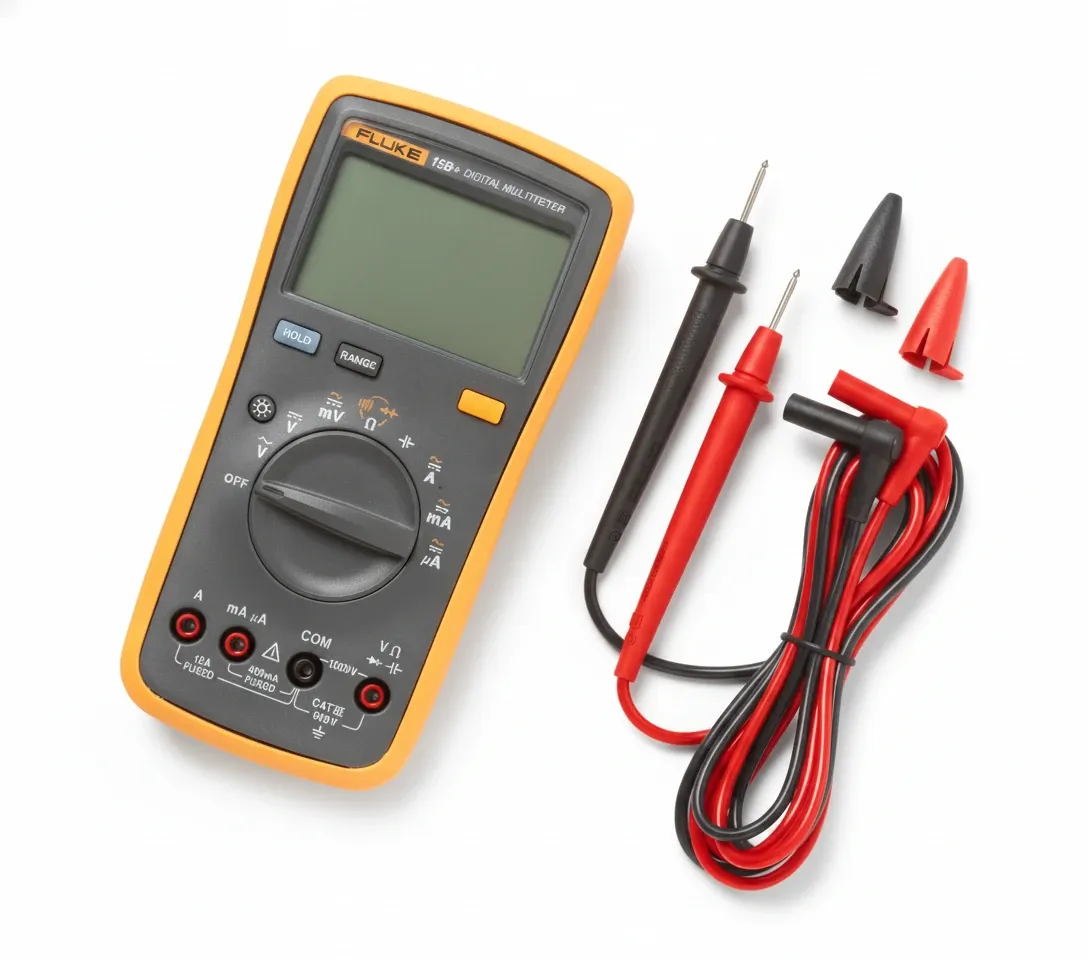
TL;DR: What is a CAT III multimeter?
A CAT III multimeter is a test instrument rated to withstand the transient overvoltages found on distribution-level circuits — consumer units, fixed wiring and three-phase distribution boards. In the UK, CAT III 600 V is the minimum practical rating for electricians working on building installations under BS 7671. The rating only protects you if it is genuine, so judge a budget meter by the evidence — independent certification to IEC 61010, fused leads, moulded protection and a warranty the maker stands behind — not by what is printed on the case.
Key Takeaways
- CAT III covers distribution circuits within buildings — the level most UK electricians work at daily.
- Transient overvoltages from switching loads, motors and lightning can destroy under-rated meters and injure the user.
- A genuine rating is independently certified — UKCA or CE marking backed by IEC 61010 — and carried through the whole kit: fused leads, shrouded probes, moulded input protection.
- "CAT III 600 V" printed on a cheap case costs the factory nothing; the checks in this guide tell you whether the engineering behind it is real.
- Match the meter's CAT rating to the highest-energy point you test — and know where CAT III stops and CAT IV begins.
A CAT III multimeter is not simply a feature-list item — it is a safety-critical rating that tells you where in an electrical installation the instrument can be used without risk of catastrophic failure. For a working UK electrician on 230 V single-phase and 400 V three-phase installations, understanding CAT categories is as important as knowing how to read a voltage display — especially when the meter you are weighing up costs a fraction of the premium brands.
Measurement categories are defined by IEC 61010, the international safety standard for electrical test equipment. They exist because routine electrical work involves far more than steady-state voltage: switching inductive loads, energising motors and operating circuit breakers all generate transient spikes that can leap across under-rated meter inputs. A CAT III-rated instrument is engineered with wider clearance distances, stronger input protection and surge-withstand components designed for exactly these conditions.
What does CAT III mean on a multimeter?
Measurement categories run from CAT I (low-energy electronic circuits) through CAT IV (supply origin and outdoor overhead lines). CAT III sits in the middle and applies to fixed installation wiring — the circuits found in distribution boards, consumer units, busbars and permanently connected equipment.
CAT II vs CAT III: when does it matter?
CAT II covers single-phase receptacles and plug-connected appliances. A CAT II meter may be adequate for bench electronics or appliance repair, but it is not rated for work inside a UK consumer unit or on a three-phase distribution board. Many electricians have learned this distinction the hard way when a cheap CAT II meter failed during a routine insulation check.
CAT III vs CAT IV
CAT IV applies to the origin of the installation — the point where the supply enters the building, including the meter tails and main switch. If you regularly work on mains incomers or outdoor supply equipment, CAT IV 600 V is the appropriate minimum. For most installation and maintenance work on distribution circuits, CAT III 600 V is sufficient and widely used across the UK trade.
Why CAT III matters for UK electricians
UK domestic and commercial installations operate at 230 V single-phase and 400 V three-phase. Distribution boards, ring final circuits, radial lighting and commercial sub-distribution all fall within the CAT III measurement zone. When you remove a consumer unit cover and probe a busbar or MCB terminal, you are working at CAT III energy levels.
In practice, the CAT rating is the first filter when choosing a site multimeter — before brand loyalty, display size or feature count. If you work inside distribution boards, CAT III is the minimum, full stop. The good news for anyone whose budget will not stretch to premium-brand prices is that a genuine CAT III 600 V rating is not exclusive to the big names: what matters is the evidence behind the marking, and the buying checklist below shows you exactly what to look for.
One pairing worth noting: modern installations are full of non-linear loads (LED drivers, inverters, EV chargers), so a CAT III meter with True RMS measurement will read those distorted waveforms correctly where an average-responding meter drifts.
What to look for when buying a CAT III multimeter
Here is the uncomfortable truth about budget test gear: the letters "CAT III 600V" cost nothing to print. Plenty of good electricians cannot justify premium-brand prices for a day-to-day meter — and they should not have to. But once you shop below the big names, the burden of proof shifts to you, and the real question becomes: is this rating engineered, or just ink on the case?
How to tell a genuine CAT III rating from a printed one
- Independent certification marks. Look for UKCA or CE marking backed by an explicit reference to IEC 61010 — the standard the CAT system comes from — in the manual or datasheet. A meter that claims CAT III but never mentions IEC 61010 anywhere is a red flag.
- Fused leads in the box. A meter is only as safe as the leads plugged into it, so check the kit ships with fused GS38 test leads with shrouded tips rather than bare pins on thin cable.
- Moulded protection you can see. A double-insulated moulded case, barriers between the input jacks and high-energy (HRC) fuses inside — not a thin shell with a sticker.
- A warranty the maker will honour. A brand that puts a 2-year UK warranty behind its meter is betting its own money that the rating is real; disposable meters rarely offer more than the till receipt.
Beyond the safety case, the day-to-day features that earn their keep are True RMS measurement, a fast and audible continuity beeper, and a backlit display you can read in a loft or plant room.
The Digimeter Pro True-RMS is built to exactly this brief: CAT III 600 V with True RMS measurement across AC/DC voltage, current, resistance and continuity, at £176.02 inc VAT — a long way below premium-brand prices — and backed by a 12-month UK warranty and 30-day returns.
Where a CAT III 600 V meter is not the right tool
CAT III 600 V covers consumer units, distribution boards and the fixed wiring inside a building. It is not rated for the origin of the installation — meter tails, the cutout, the supply side of the main switch or outdoor supply equipment. That is CAT IV territory, and if supply-side work is a regular part of your week, buy a CAT IV-rated instrument for it rather than stretching a CAT III meter beyond its envelope.
Frequently Asked Questions
Is CAT III 600 V enough for UK three-phase work?
Yes — UK three-phase distribution runs at 400 V between phases and 230 V to earth, which sits comfortably inside a CAT III 600 V envelope. Check the manual states the rating for the voltage input pair, not just as a badge beside the dial.
Do test leads have their own CAT rating?
They do, and the chain is only as strong as its weakest link: a CAT III meter used with unrated leads is not a CAT III setup. Replacement leads should carry their category and voltage on the moulding itself.
Does a higher CAT rating mean a more accurate meter?
No. CAT ratings describe surge withstand, not precision. Accuracy is quoted separately for each function (for example ±0.5% on DC volts), so compare both figures independently when weighing up meters.
What actually happens if a transient hits an under-rated meter?
The input circuitry can flash over internally, and at distribution energy levels that can escalate into an arc-flash event at the meter or probes. This is why measurement categories govern clearance distances and input components, not just the electronics.
Is a CAT III rating legally required in the UK?
No law names CAT ratings directly. HSE guidance and BS 7671-aligned practice expect test equipment suited to the energy level of the work, and CAT III is the benchmark assessors and inspectors expect to see for distribution-level jobs.
Ready to upgrade your test gear with Digimeter?
Shop Digimeter Pro TRMS — £176.02